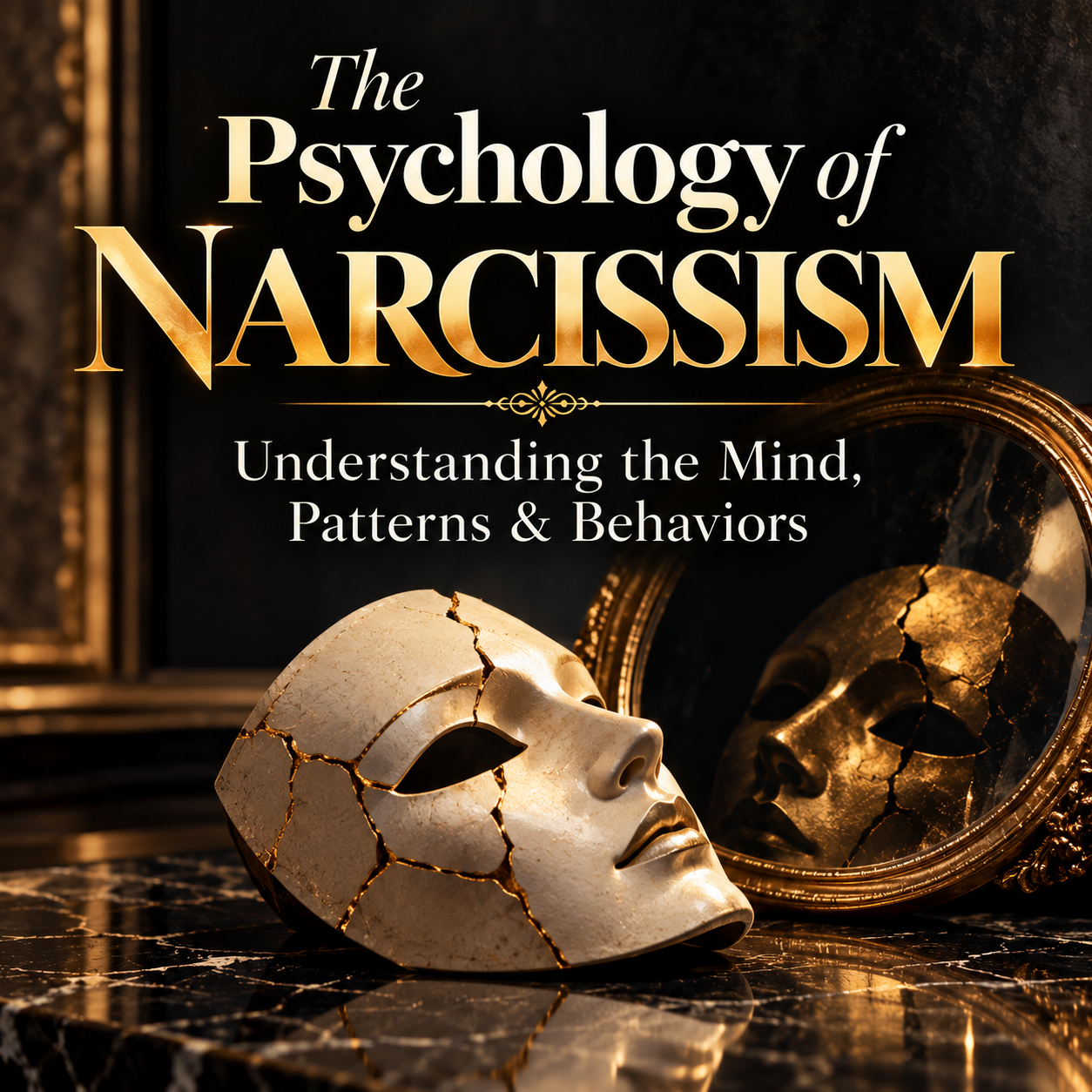
The Psychology of Narcissism
Narcissists can be masters of disguise. They may initially appear charming, confident, attentive, and charismatic. They know how to say the right things and make the right gestures. They create a powerful sense of connection and can make someone feel uniquely valued, desired, and loved. But beneath that carefully constructed image, troubling patterns may gradually emerge.
The criticism begins. Manipulation becomes more apparent. Control starts to replace connection. Boundaries are tested, emotions are exploited, and the relationship can become increasingly confusing and damaging. By the time the pattern becomes unmistakable, the other person may already be deeply invested and struggling to understand what went wrong.
The Psychology of Narcissism explores the patterns and behaviors associated with narcissism, particularly in relationships. It examines the warning signs that can appear in the early stages of an interaction, the red flags that are often overlooked or rationalized, and the behavioral patterns that may reveal a deeply unhealthy dynamic.
The book also explores common manipulation tactics, emotional control, gaslighting, idealization, devaluation, boundary violations, and other forms of harmful behavior. Rather than focusing on a single type of relationship, it provides a framework for understanding how narcissistic patterns can develop and how they can affect those around them.
Recognizing the pattern early can make it easier to understand what is happening and respond with greater clarity. The more you understand narcissistic behavior, the better equipped you are to recognize unhealthy dynamics, protect your boundaries, and reclaim your sense of self.
























Write a comment ...